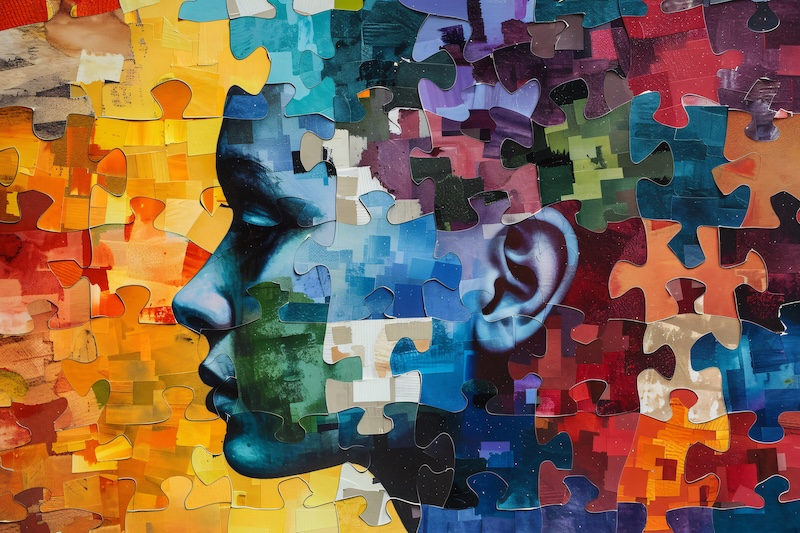
It’s time for another neurodiversity post here on RJsCorner. This one is primarily about how the medical community goes about classifying anomalies in the human condition. This post I will focus on the Autism/Aspergers/Neurodiversity field. I will say it up front that it just seems that the medical community insists on putting everyone in defined boxes, the fewer the boxes the better.
When I discovered that I fit in one of those boxes, it was a eye-opening discovery. The box they put me in was “Aspergers Syndrome”. Then a few years later they decided to merge Aspergers into a bigger box called Autism. They claimed Autism was a spectrum and it was very wide. That is it ranged from those who had no ability to take care of themselves to those super intelligent, (think Einstein).
Now I come to find out that they have defined this broad spectrum into just three categories. Level 1 (requiring support), Level 2 (requiring substantial support), and Level 3 (requiring very substantial support). I personally don’t see myself in any of those categories.
There are others who recognize that many in this spectrum are “high-functioning”.
High functioning autism is a term used to describe individuals who are on the autism spectrum and have relatively good cognitive and language abilities. These individuals may have average or above-average intelligence and are able to function independently in most aspects of their lives.
The study from which the red letters above came also claims that 30% to 70% of individuals with ASD can be classified as high functioning. This includes those that have exceptional abilities in certain areas such as mathematics, music, or visual arts. Other medical journals report that 80% of those with Austism are unemployed? I don’t think so…
To me, it is becoming more and more difficult to accept the Autism label. Yes, I share some of the challenges defined by ASD such as: a having poor social skills and heigthened sensory sensitivity. But I also have some the unique strengths and abilities such as: attention to detail, memory and information processing, pattern recognition, focus, and honesty and integrity.
I believe that my strengths far outweigh my challenges in this area.
Nine years ago, when I discovered that many characteristics I have had all my life had a name. If I had discovered this much earlier in life, and if today’s intervention methods were available then to ameliorate these challenges, would I have taken advantage of them? If that intervention to improve social skills weakened some of the unique strengths then I hope I would certainly say “NO” to interventions.
To close out this post, I believe that The Autism Spectrum Disorder” is in its early stages of understanding. If I was the decider, the first thing I would do is to take the word “Disorder” out of the title and maybe remove those who are “high-functioning” from the spectrum.
My next post on this topic will be about how mental health is undergoing a quiet revolution that is shaking the foundations of how we understand what it means to live a full and meaning life.
 RJ's Corner - Having My Say
As long as I have known you, I have not thought of you as easily defined by a simple label. You have too many interests, passions, and ways of interacting with others and the world around you, to be confined in one box of artificial definition.
if you require a label, go with unique. Every human being is a one-of-a-kind creation, with a combination of physical, emotional, and mental facets that are not replicated by any one of the other 8 billion of us.
People love to quantify with labels and boxes; human beings rarely are that easy to figure out.
Bob Lowry
LikeLike
Thanks again for your kind words, Bob. I am currently working on a new 6 post series about how the mental health medical community is in a quiet revolution about this very topic. This post is a precursor about that. I guess I am not the only one who doesn’t like the “sick” labels attached to me. 😎
LikeLike