
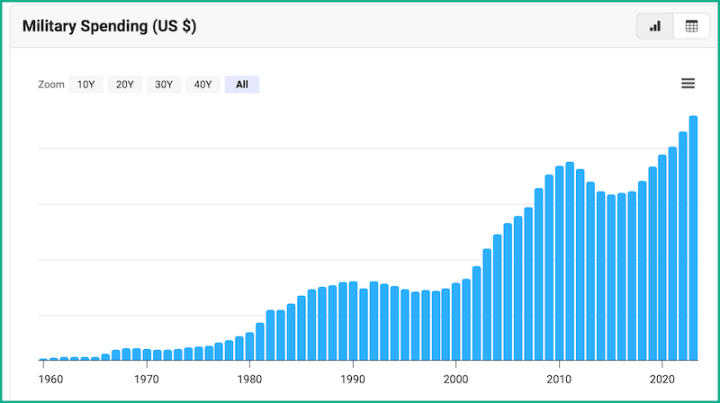
I don’t understand why we in the U.S. spend so much of our taxpayer’s money defending the European Union and other developed nations? When the EU was formed the E.U. dollar and the U.S. dollar were the same. Now EU$ is worth about 20 % more than the U.S. Part of that is because they let us do the military spending for them.
About $100 billion of the U.S. military annual budget is spent on foreign soils, much of it in the EU. Why can’t they provide for its own defense? $100 billion a year would go a long way in balancing our annual budget and what’s left over could provide healthcare for all.
I just don’t understand?


I found this post thought‑provoking because it touches on something that often looks puzzling from the outside: why the United States maintains such a large network of overseas military bases long after the original Cold War logic faded. From what I understand, the primary purpose of these bases is not so much to protect the host nations as to extend the U.S. strategic perimeter outward. By positioning forces close to potential flashpoints, the U.S. keeps any major conflict as far from its own territory as possible.
That logic makes sense from a U.S. perspective, but it does create an asymmetry. For the countries that host these bases, the presence of foreign forces can bring both benefits and risks. The benefits are usually framed in terms of security guarantees or economic activity. The risks are less often acknowledged: in any conflict involving the U.S., the bases themselves become targets. We’ve seen this recently in the exchanges between the U.S. and Iran, where American facilities in neighbouring countries were struck by missiles and drones. The host nations weren’t parties to the dispute, yet they still absorbed the consequences of it.
There’s also a broader structural issue. Once established, overseas bases tend to persist through institutional inertia. They become part of the default posture, even when the strategic environment has changed. That can make it difficult to distinguish between what is genuinely necessary today and what remains simply because it has always been there.
So while the global basing network is often presented as a stabilising force, it’s understandable that people looking at it from the outside might see something more ambiguous — a system that serves U.S. strategic interests first, and that can expose host nations to risks they did not choose.
LikeLike
An interesting alternative view, Barry
LikeLiked by 1 person